
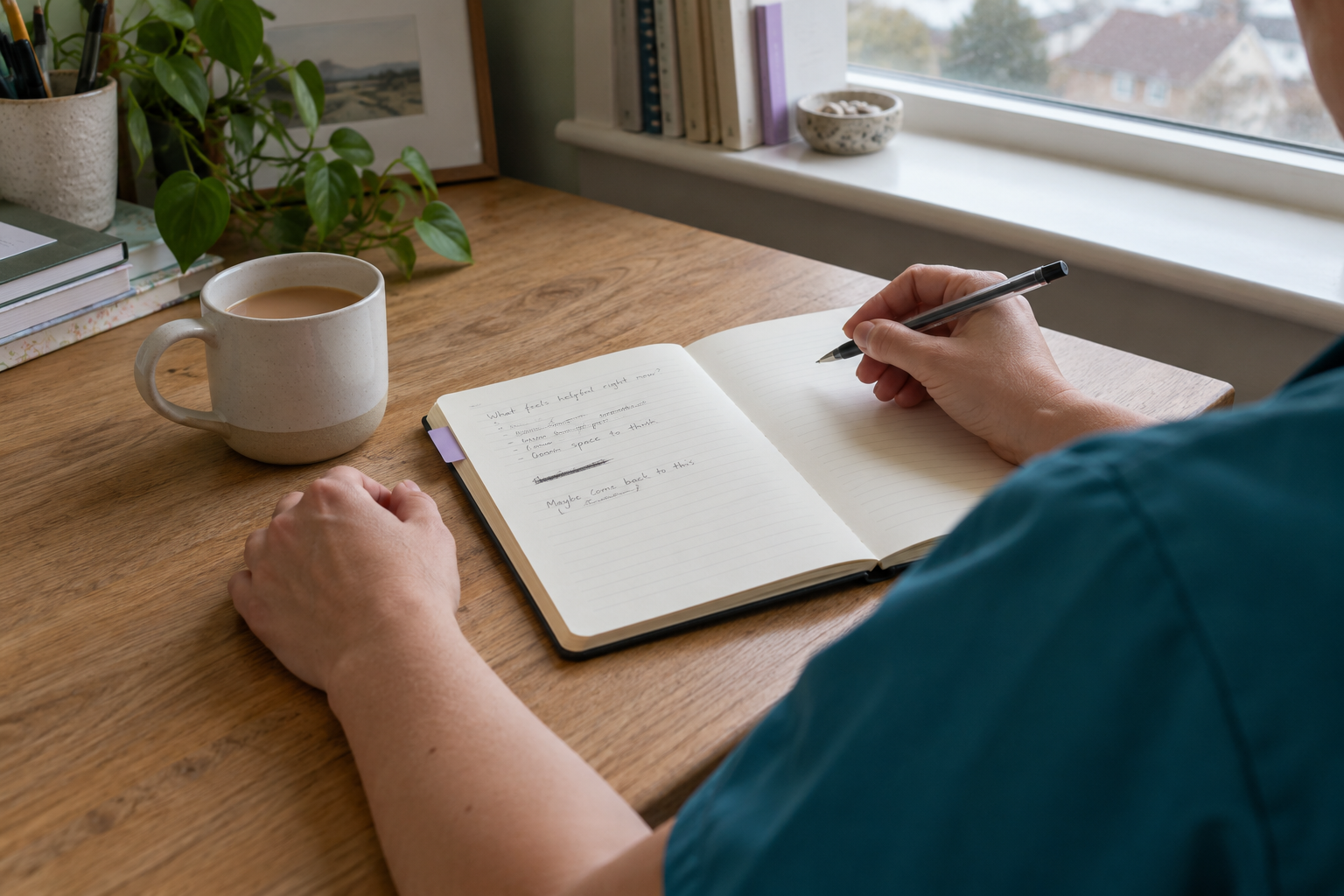
Choose a moment that stayed with you
Think of a moment that made you pause. Perhaps you felt proud, faced something new or weren’t sure what to do. Focus on that experience — there’s no need to write about the whole day.
Start with what happened, then explore how you felt
What stood out to you? What did you understand, and what left you with questions? Be honest with yourself, but be kind too. Finding something you need to learn more about is part of learning.
If you are completing assessed reflection, follow your university’s or employer’s requirements and use the framework they ask for. A personal reflection sheet is a starting point, not a substitute for that guidance.
Keep it confidential
Use general descriptions. Do not include patient identifiable details, clinical records or confidential information about colleagues or your workplace. For concerns about care or safety, follow the appropriate local reporting and supervision processes.
Choose one thing to build on
Choose one small action to help you move forward. You could read more about the topic, talk it through with your supervisor or practise a skill with the right support. Make it something manageable and appropriate to your role.
What question helps you reflect most usefully? Share the question rather than the details of a clinical situation.
General educational support, not individual medical advice. Follow current guidance, local policies and supervision.